A Private Sewer Lateral (PSL) is the pipe that carries wastewater from a building to the public sewer main.
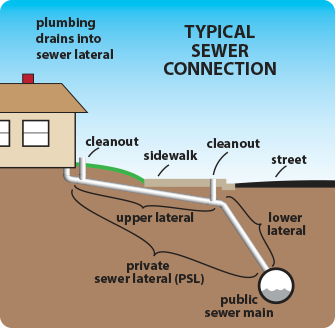
In most areas, all sewer pipes and related structures on private property, located upstream of the public sewer main, are considered part of the PSL. This includes pipes of any size or length, as well as private sewer mains and manholes.
In Albany and Alameda, only the “upper lateral” is covered by the program. The upper lateral is the section of pipe that runs from the building to the property line or curbside cleanout. These requirements are set by each city’s local sewer ordinance.
Many homes in the East Bay were built before 1950 and still have their original sewer pipes. These older pipes are often made of clay. Over time, they can crack, shift, or break apart, and tree roots can grow into them. This can cause leaks, clogs, and other serious problems.
Damaged or leaking PSLs can lead to:
- Raw sewage leaking into soil and groundwater, which can contaminate private property and nearby creeks
- Sewage flowing into the Bay, especially during rainstorms when excess water overwhelms sewer pipes and treatment plants
- Sewage backups in homes and businesses, causing property damage and health risks
- Sewer overflows onto streets, storm drains, and creeks, caused by water entering cracked pipes or roots blocking the line
- Fines to local jurisdictions from the Environmental Protection Agency, which are ultimately paid for with public funds
Leaving a damaged or failing sewer lateral unrepaired is a violation of local city ordinances and may result in enforcement actions against the property owner.