Guide for Leaks and High Bills
If your water bill is higher than usual, you may have a leak. Use this step-by-step guide to help you check for leaks around your property and, in some cases, make the repairs yourself.
Interested in real-time water use data and leak alerts? Check out our Flowmeter Rebate Program.
Follow the steps below:
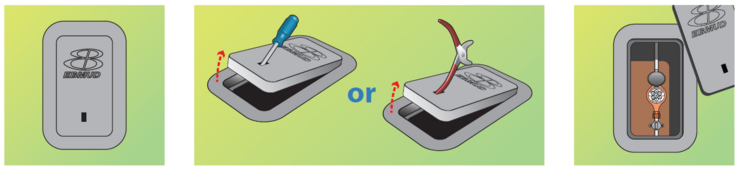
The water meter is usually in a concrete box near the curb. Look for the EBMUD logo on the lid. To view the meter dial, carefully lift the lid and slide it off to one side.
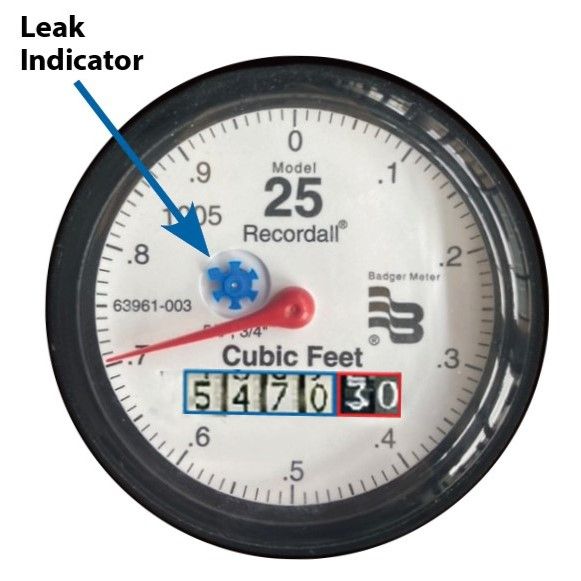
Start by turning off all running water in and around your home. Then, check your water meter's leak indicator to see if it's moving. This is often a small triangle or dial that spins when water is flowing.
- If the leak indicator is moving, you likely have a leak and should proceed to the next steps to help determine its location.
- If the leak indicator is not moving, we recommend performing a Pin Test to check for small or intermittent leaks.
Test for leaks using the Pin Test:
-
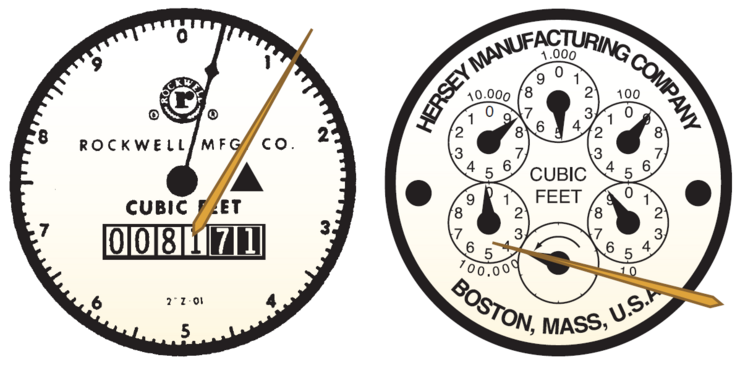
Place a toothpick or pin on the face of the meter dial so that it lines up exactly with the dial hand or edge of the triangle. You can also take a photo with your phone.
-
Wait 30 minutes without using any water.
-
Check the meter dial again before turning anything back on.
-
If the hand has moved, you likely have a leak.
Meters read in cubic feet. 1 cu. ft. = 7.48 gallons. One turn of the large hand equates to 1 cubic foot or 7.48 gallons of water used. Click here for more information reading your meter.
Test for Houseline Leaks:
-
Locate the houseline shut-off valve and turn it off. This valve is typically found where the pipes lead into your house, in a straight line of sight from your water meter. In some homes, irrigation systems branch off before the house shut-off and have their own valve. If this is the case for your home, locate and turn off the irrigation valve as well.
-
Place a toothpick or pin on the meter dial to mark the hand's position or take a photo.
-
Wait 30 minutes without using any water.
-
Check the water meter:
-
If the dial moved, there may be a leak on the pipe leading from the meter to your house (the houseline) and we recommend contacting a plumbing professional.
-
If the dial did not move, there is no leak in the main line from the meter to your house. A leak likely exists inside your home, after the houseline shut-off valve.
-
Test your toilets for leaks:
Toilet leaks are the number one cause of high-water bills. The leak may be caused by a failing flapper, plunger ball, float ball or fill valve.
Check your toilets for leaks using a simple dye test. Add a few drops of food coloring to the water in the tank, wait 15-30 minutes. If you see color in the toilet bowl, you have a leak and will need to replace the flapper valve or adjust the fill valve.
For comprehensive guidance on understanding your irrigation system, locating leaks, and controller programming, check out EBMUD's Outdoor Home Survey.
Test your irrigation system for leaks:
-
Look for wet ground or areas that are greener than the rest of the landscape. These spots could be getting extra water due to a leak in underground pipes or from broken sprinklers.
-
Next, run each zone on your irrigation system one at a time using our Irrigation System Check-up worksheet. Check for the following problem signs:
-
Uneven pressure (could mean a leak in an underground pipe)
-
Leaking or stuck valves
-
Blocked, clogged, or broken spray heads
-
Uneven coverage
-
Disconnected drip tubing
-
Missing or clogged drip emitters
-
Spray hitting sidewalks or driveways instead of plants
-
-
Check your irrigation controller:
-
Incorrect schedules or a malfunctioning controller can lead to overwatering, which may look like a leak on your bill.
-
Review your controller settings to ensure they match your landscape’s actual watering requirements - refer to our Watering Schedule Guide for help.
-
Some irrigation controllers have a backup battery. If the power goes out during a watering cycle and the backup battery is dead, your irrigation valves may not close, leading to overwatering.
-
To catch issues early and improve efficiency, consider upgrading to a smart irrigation controller with a compatible flow sensor (rebates available).
-
-
Look around the base: Inspect the floor around the water heater for puddles, damp spots, or stains. Any standing water or active dripping is a clear sign of a leak.
-
Check the pipes at the top: Examine the inlet (cold water) and outlet (hot water) pipes on top of the tank. If you feel moisture or see drips, it could be a loose connection or a small leak at the fittings.
-
Inspect the pressure relief valve: Find the temperature and pressure (T&P) relief valve - usually located on the side or top of the tank with a pipe running downward. This valve helps release water and steam if the temperature or pressure inside the tank becomes dangerously high. If it's dripping or shows signs of corrosion, it may be faulty or reacting to excess pressure inside the tank.
-
Examine the drain valve: This valve is near the bottom of the tank and can sometimes leak over time. Check that it’s fully closed and not dripping or rusted.
-
Maintenance tip: Every 6 months, attach a garden hose and drain a few gallons into a bucket to flush out sediment. This helps prevent buildup, reduces corrosion, and extends the life of your water heater.
-
-
Check the tank itself: Look closely at the body of the water heater for rust, cracks, or visible water. If water is leaking directly from the tank, it usually means internal damage - and the whole unit likely needs to be replaced.
-
Turn off the autofill valve: Many pools have an automatic fill valve that adds water when the level drops, similar to how a toilet tank refills. While convenient, it can hide leaks by constantly topping off the water. Before testing for leaks, make sure the autofill system is fully turned off so you can measure water loss accurately.
-
Perform a Bucket Test: Place a bucket on a pool step and fill it with pool water until the level inside matches the level outside the bucket (about 3 - 4 inches from the top). Mark both the inside and outside water levels using tape or a marker. Wait 24 to 48 hours.
-
If the water level in the pool drops more than the water level inside the bucket, you likely have a leak.
-
If both water levels drop the same amount, it’s likely just evaporation.
-
If you suspect a leak, it’s best to contact a pool professional to locate and fix it.
-
-
Check faucets for drips: Look and listen for steady or occasional dripping from the spout, even when the faucet is fully turned off. A slow drip usually means a worn-out washer or cartridge.
-
Inspect under the sink: Open the cabinet below the faucet and feel around the shut-off valves and supply lines. Look for moisture, corrosion, or mold. These could signal hidden leaks from plumbing connections.
-
Check showerheads for leaks: If water drips from the showerhead after the water is turned off, you may have a worn-out rubber washer or a loose connection. Try tightening the showerhead or removing it to inspect and replace the washer.
-
Inspect the shower diverter: Turn on the tub faucet and pull up the diverter to switch water to the shower. If water continues to flow from the tub spout while the shower is running, the diverter isn’t sealing properly. This wastes water and reduces shower pressure.
-
Look for water damage around fixtures: Check nearby walls, tiles, and ceilings for peeling paint, soft spots, or discoloration. These may be signs of slow leaks behind the wall.
Fixes can be simple:
-
Most faucet and shower leaks can be fixed by replacing washers, cartridges, or using plumber’s tape.
-
Diverter valves may need cleaning, repair, or replacement depending on the type and age.
-
If you're unsure, call a licensed plumber before water damage or mold develops.
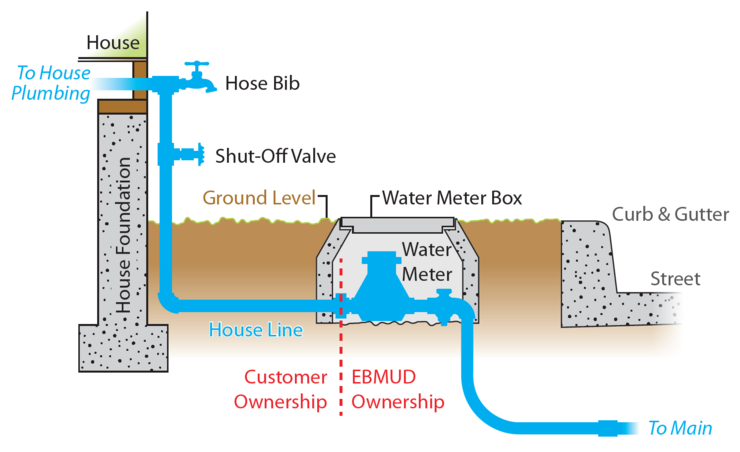
Some meter boxes are below grade and commonly fill with water after rain. EBMUD meters are designed to work even when fully submerged.
-
EBMUD is responsible for leaks on the street side of the meter, including the meter itself and the threads where the customer's plumbing connects.
-
Customers are responsible for leaks and repairs on the customer side of the meter (the side leading into the property). If the meter dial is moving when no water is being used, water is flowing through the meter, meaning the leak is on the customer side. We recommend performing a “Pin Test” as described in Step 2, Check if you have a leak, to help locate it.
Learn more about how your meter works by watching this short video.
Take action: If you observe water leaking that appears to be on the EBMUD-side of the meter, please call 1-866-403-2683 and press 1 for Emergency Dispatch. Be prepared to provide the street address of the meter and indicate whether water is flowing from the meter box.
High water bills may also be caused by frequent watering of a new or existing lawn or landscaping, incorrect irrigation controller programming, filling a swimming pool, an increase in the number of occupants, water theft, home water filtration systems, and open faucets or irrigation systems.
Most customers have meters that are read manually every other month, which means a leak may start and stop before you ever know it, often not becoming apparent until the bill arrives. In these cases, testing for leaks afterward won’t reveal the issue because the event has already ended. To help catch leaks in real time and receive alerts within minutes, consider our Flowmeter Rebate Program, which allows you to monitor your water-use in real-time.
Tips & tools
- Contact an IAPMO certified plumber: Listed plumbers have completed the CalWEP Leak Repair Elite plumber training. Listing does not guarantee quality of service, nor imply endorsement from EBMUD.
- Order a free home survey kit to test for leaks and qualify for free water-saving devices like showerheads, faucet aerators, or a garden hose nozzle.
- Visit our outdoor home survey guide for comprehensive guidance on understanding your irrigation system, locating leaks, and controller programming.
- Learn how to read your meter to better understand how your water use is calculated.
- Set up leak alerts to monitor your water use and get notified of potential leaks or changes in usage.
- Apply for a flowmeter rebate to access to real-time, minute-by-minute water use data.
- Visit our understanding your bill guide to learn more about the charges, fees, and details included in your water bill.
- Explore water conservation rebates to save water and money through landscape upgrades, irrigation improvements, and more.
- Visit our water leak FAQs for answers to common questions and guidance on addressing repairs.
- Report water waste to let us know about possible leaks or water misuse in your area.