Step-by-step guide
Transform your lawn into a water-wise garden with this guide and helpful resources.
Lawn conversion to low water plants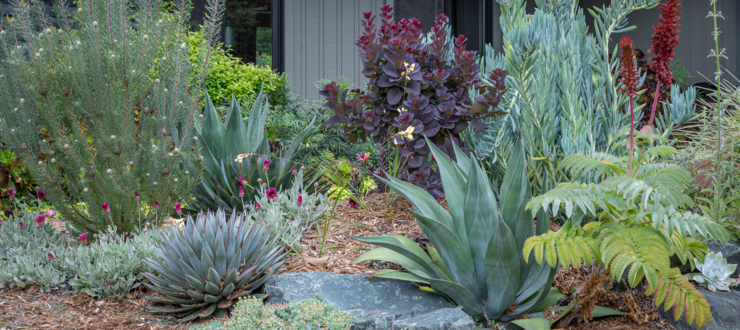
Step 1. Get inspired!
Explore your community, talk to neighbors, and visit a nursery or botanical garden for inspiration of what might work best in your climate.
Sustainable Landscape Map
Use this map to find beautiful, water-wise and accessible community gardens throughout our region.
Bringing Back the Natives Garden Tour
Browse beautiful, water-conserving native gardens throughout the East Bay that are part of the tour every year on the first weekend of May.
CNPS Getting Started
Selecting the right native plants for your location is the first step to creating a successful native plant garden.
Landscape Water Savings Calculator
Find out how many gallons of water you can save annually by converting your lawn to a low water use garden.
Step 2. Plan your water-wise garden
Free design resources to help you get started planning your garden.
Landscape Design Templates
Eight contemporary front yard plans. Templates are courtesy of the Sonoma-Marin Saving Water Partnership.
Native Planting Guide and Design
This easy guide takes the guesswork out of which plants to use where. Download the printer-friendly version.
Calscape Bay Area Garden Planner
Find the perfect native plants for your garden and designs to fit your landscape style. Plants are customized based on your zip code.
Rainwater Harvesting
Passive rainwater catchment builds healthy soil and attracts essential life into the garden. Explore the booklet, California Watershed Approach to Landscape Design.
Step 3. Apply for a rebate
If your lawn has been irrigated with potable EBMUD water, actively maintained (mowed) for at least the past 3 years and the project has not started, you may be eligible for a rebate.
Learn more about EBMUD rebates.
Step 4. Choose your plants
Several resources are available to help you choose low-water plants that thrive in Bay Area climates.
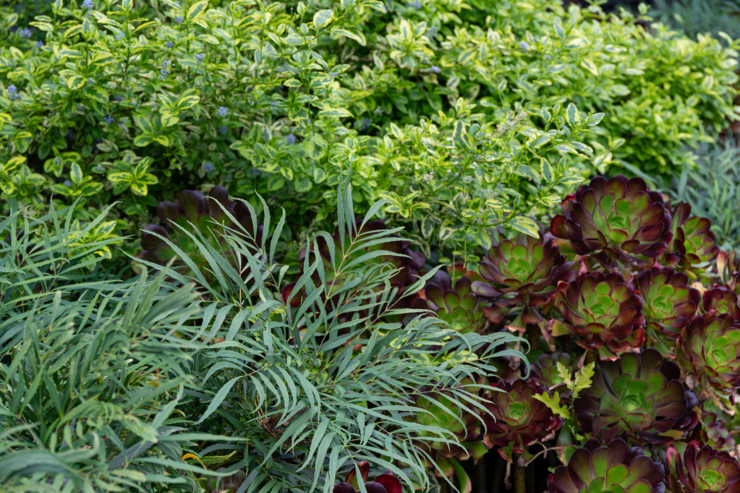
Calscape - Why native plants?: Discover the perfect CA native plants for your garden and designs that fit your landscaping style.
Tree Selection: Trees are one of the most efficient elements of your landscape. Our Treebate Pilot webpage has additional resources on finding and caring for a tree.
How Much Water? (WUCOLS): Discover the water needs of your plants. This database catalogs water use of over 3,500 plants. Only plants with 'Low' or 'Very Low' water needs will qualify for a rebate.
Firescaping: Fire affects everyone living in California. View this webpage to learn more about guidelines that are intended to reduce fire hazards but cannot guarantee fire safety.
Step 5. Remove your lawn
EBMUD encourages sheet mulching to improve soil health, reduce green waste and need for herbicides.
Sheet mulching
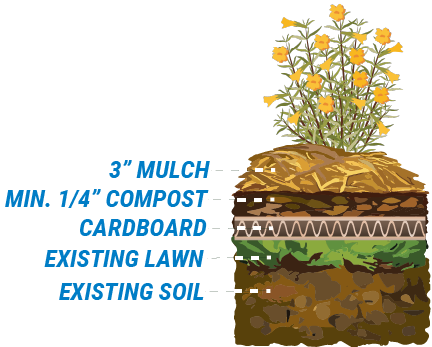
- Visit Lawn to Garden for a guide to the sheet mulch process.
- Discover how to build healthy soil with compost and mulch through StopWaste.
- Compost coupons: EBMUD offers discounts at local suppliers for compost.
Additional removal options
Explore the pros and cons of other lawn removal methods on California Native Plant Society.
Step 6. Choose your irrigation method
Unsure where to begin? Visit Save water outdoors to learn more about efficient irrigation.
In-Line Drip
Drip irrigation delivers water slowly to a plants' roots, allowing the soil to absorb water rather than creating runoff onto the road or sidewalk. Our sample design layouts provide ways to design a durable drip irrigation system into your landscape.

High-Efficiency Nozzles
High efficiency rotating and precision nozzles use less water than conventional spray nozzles and can greatly improve the irrigation system and pressure.
- Watch our video on how to upgrade your sprinkler nozzles.
- If eligible for a rebate, view the list of qualifying high-efficiency nozzles.
Self-Adjusting "Smart" Controller
A smart controller turns your irrigation system on and off in response to local weather or soil data, and can adjust your irrigation system daily.
- Find an EPA WaterSense labeled controller.
- Watch our video on how to program your smart controller.
Step 7. Add hardscape elements
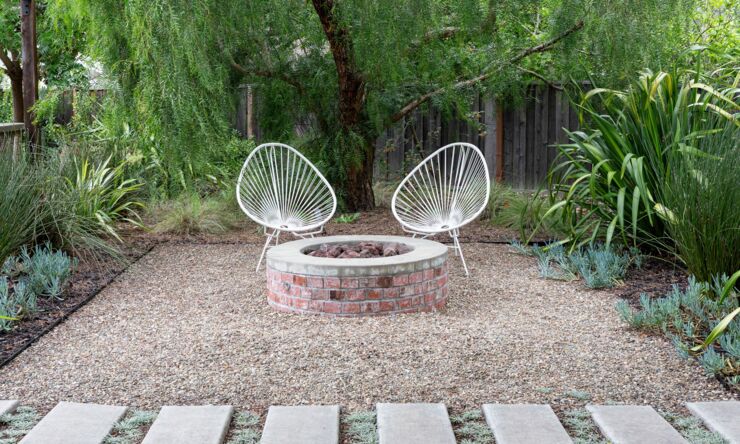
Visit a local rockery or landscape supplier to view samples of materials that could work for your garden.
Find out how to install popular pathway materials such as decomposted granite or gravel on the Waterwise Garden Planner of Southern California.
Step 8. Install plants
Proper planting is important to the long-term success of your landscape.
- California Native Plant Society and Calscape new plant care provide planting tips for installing California natives.
- Detailed drawings on how to plant California natives and low-water plants can be found on Waterwise Garden Planner of Southern California.
- Download instructions from the Arbor Day Foundation on how to plant potted trees.
Step 9. Apply mulch
Mulch helps soil retain moisture, suppresses weeds, and beautifies your garden. Apply a minimum of 3 inches of organic mulch to planted areas and over exposed soils, being sure to leave areas around the base of plants and trees unmulched to prevent rot or potential diseases.
Mulch Coupons: EBMUD offers discounts at local suppliers for mulch.
