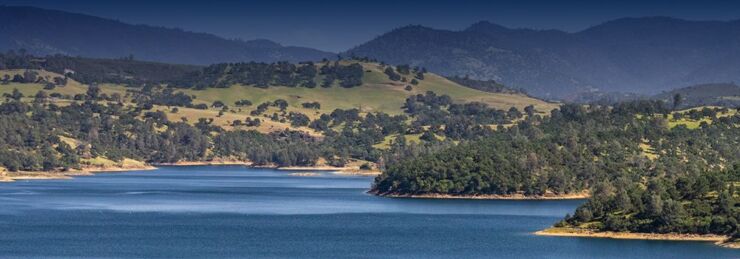
Solid winter rainfall offset by a meager snowpack leaves the East Bay with a complicated water supply outlook. EBMUD reservoirs hold enough to meet our needs this year. But a dry March accompanied by a snow-melting heat wave all but erased the frozen reserves that typically replenish our supplies as spring turns into summer.
How do changing conditions affect planning and operations? We asked our experts:
What is the biggest challenge to water supply forecasting?
EBMUD engineers and hydrologists create water supply forecasts using modern scientific observations and nearly a century of historical data. That data is becoming less predictive as the climate changes and new weather patterns emerge. Our experts collaborate with Nevada’s Desert Research Institute and UC San Diego’s Scripps Institution of Oceanography to utilize the best science and apply the latest tools and techniques.
Why does it matter if snow melts early?
Snowpack is essentially a frozen reservoir that acts like a water savings account. When it melts early and all at once, we must let more runoff pass through to the ocean to maintain required space in our reservoirs for downstream flood control. That leaves less in the savings account come summer to replenish our supply.
What is EBMUD doing to save water and minimize leaks?
A lot. We identify our most vulnerable underground pipes and strategically replace them before major breaks happen. We test and deploy pipes made of advanced materials to minimize water loss. We use sensitive acoustic devices to detect and repair leaks on pipes before they surface on the road. And we invest in conservation programs and recycled water infrastructure.
What can customers do?
Many customers continue to make water conservation a way of life. To all taking steps to save water – fixing leaks, landscaping with low-water plants, reducing water waste – keep up the good work!
Learn more at Water supply, Pipeline replacements, and Conservation