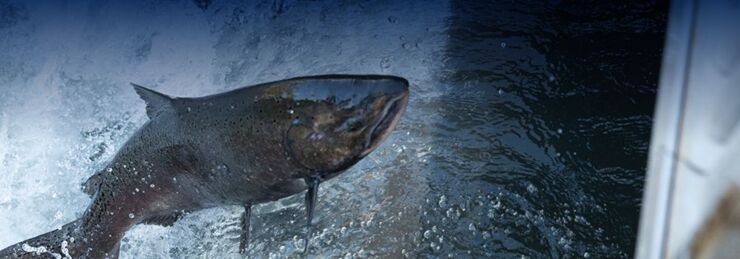
Talk about an overachiever. The Mokelumne River not only supplies some of the best water on the planet to nearly one and a half million people in the East Bay. It also supports one of California’s most robust salmon populations.
Over the past few months, strong salmon returns have contributed to natural spawning in the river and allowed our Mokelumne River Fish Hatchery to reach its goal of collecting and fertilizing 7.5 million salmon eggs in partnership with the California Department of Fish and Wildlife.
The Mokelumne’s remarkable role as a salmon superhighway benefits from natural characteristics. Fed by Sierra Nevada snowmelt, its clean, clear waters support healthy aquatic and riparian ecosystems. But its ability to punch above its weight reflects EBMUD’s dedication to river stewardship.
We take a science-driven approach to habitat restoration, fish hatchery operations and flow management in coordination with local, state and federal agencies.
The result is an impressive stat sheet. Though the Mokelumne only contributes about three percent of the freshwater flow to the Sacramento–San Joaquin Delta, the river can account for up to half of the state’s commercial salmon catch.
Every fall, Mokelumne Chinook salmon return to their home waters to reproduce and die after spending two to five years maturing in the Pacific. EBMUD counts these returns through the spawning season, which typically runs from September to January.
More than 10,500 Chinook salmon returned to the Mokelumne during the 2025–26 fall run, in line with historical averages for the past quarter century. This year also supported a strong run of over 730 steelhead in the hatchery, a result of careful management and release strategies to support this federally threatened species.
By balancing water management and environmental stewardship, EBMUD is able to deliver lasting benefits for both people and fish.
Learn more about EBMUD’s work on the Mokelumne River at ebmud.com/salmon